
Residential
Ant & Spider Control That Targets the Colony, Not Just the Stragglers
Targeted treatments that wipe out colonies and keep spiders out of living spaces.
Spraying the ants you can see only kills the workers — the queen keeps producing thousands more. Carpenter ants are worse: they tunnel into damp structural wood and can quietly weaken a deck or wall over a season. Check Pest Control uses non-repellent products and baits that worker ants carry back to the nest, collapsing the entire colony, and treats the cracks and harbourage where spiders hunt so your kitchen and basement stay clear.
Seasonal note
Ant activity ramps up from late spring through summer. Carpenter ant swarmers indoors in spring are a sign of an established nest that needs prompt attention.
What’s Included
- Colony identification (carpenter, pavement, pharaoh, odorous house ants)
- Non-repellent baiting that eliminates the nest, not just foragers
- Interior crack-and-crevice treatment in kitchens and bathrooms
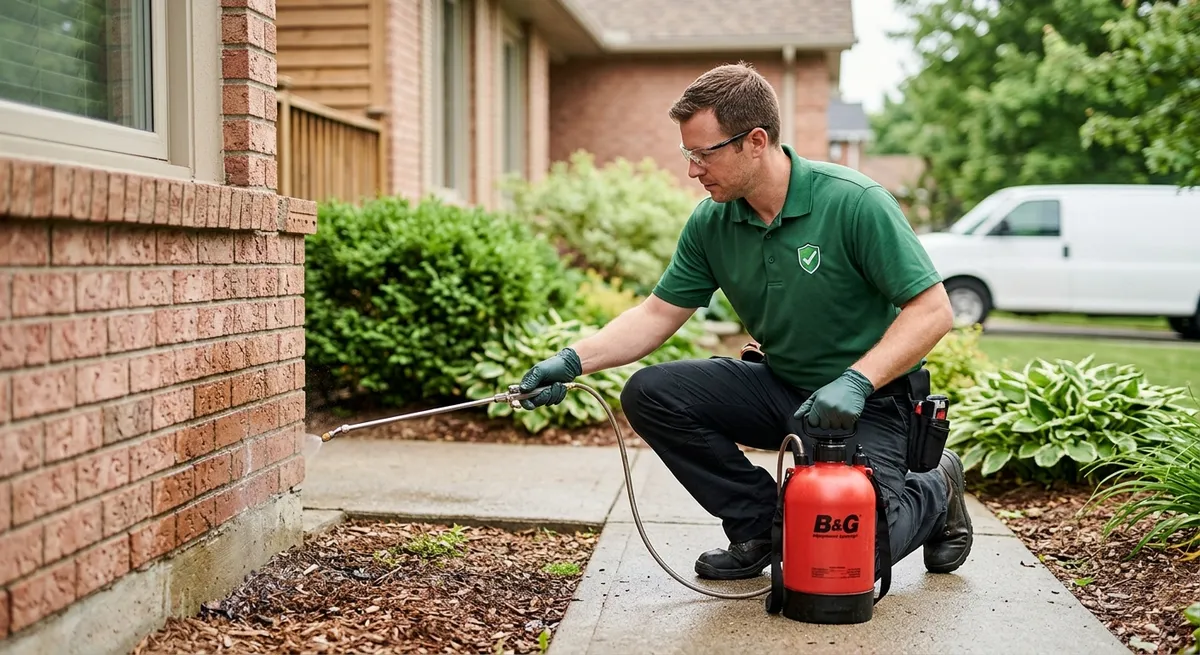
- Exterior perimeter barrier to stop re-entry
- Spider web removal and harbourage treatment in corners and eaves
- Moisture and entry-point advice to make the home less attractive
Our Process
- 1
Identify
We confirm the ant species and locate the nest — carpenter ants near moisture, pavement ants under slabs and driveways.
- 2
Bait & treat
Worker ants carry slow-acting bait back to the queen, while perimeter and crack treatments stop the trails.
- 3
Knock down spiders
We remove webs and egg sacs and treat eaves, window frames, and basement corners where spiders shelter.
- 4
Protect
A seasonal exterior barrier keeps new colonies and wandering spiders from moving back in.
Pricing: Free on-site estimate · custom quote per home.
Ant & Spider Control — FAQs
How do I tell carpenter ants from regular ants?
Why do ants keep coming back after I spray them?
Are the spider treatments safe indoors?
Which spiders in this area should I worry about?
Ant & Spider Control by Area
Related Services
- Seasonal Prevention Programs Quarterly or monthly visits that stop infestations before they start.
- Cockroach Extermination Gel baiting, residual treatment, and follow-ups for full elimination.
- Exclusion & Proofing Services Physical pest-proofing that seals gaps and stops rodents and wildlife at the source.
Book Ant & Spider Control with the Zero Pest Guarantee
Talk to a licensed technician today. Free estimates, same-week scheduling for most homes, and 24-hour emergency response for businesses.
Open 24 hours · Licensed & insured · Serving Simcoe County